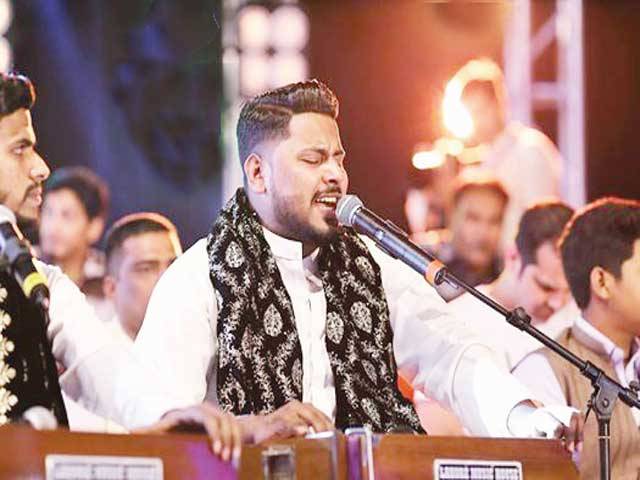
Source: The Nation, 10 January 2020 — “Hamza Akram Qawwal and Brothers took the legacy of their forefathers Int’l” — https://www.nation.com.pk/10-Jan-2020/hamza-akram-qawwal-and-brothers-took-the-legacy-of-their-forefathers-int-l
Some legacies are inherited. Others are carried forward, night after night, in front of audiences who may never have heard the tradition before. Hamza Akram Qawwal & Brothers belong firmly in the second group.
The brothers — Hamza Akram, Taimoor Akram and Abdul Akram — are the 26th generation of the Qawwal Bachon ka Gharana of Delhi, a lineage that traces its roots back more than 800 years. That is not a line they wear lightly. In a 2020 feature, The Nation described them as the youngest descendants and legacy carriers of the gharana, and as proof that the tradition is not standing still — it is travelling.
Over the past decade the ensemble has released a stream of qawwalis and songs that have found listeners far beyond Pakistan. Tracks such as “Kesa Ishq”, “Hairat e Ishq Nahin” and “Mohe Apnay Hi Rung” sit alongside a repertoire that moves between classical Persian and Brij Bhasha poetry and contemporary Punjabi and Urdu verse. What makes the performances distinctive is the balance Hamza strikes: the classical, devotional core of qawwali is kept intact, while the sound is opened up to folk colour and a modern presentation that younger audiences recognise at once.
The same feature noted how naturally the brothers move between stages. At home they have performed at the Karachi Literature Festival, at The Second Floor (T2F) and at Port Grand, and abroad they have toured the United States and the UAE, carrying Sufi music into halls where it is often heard for the first time. The report placed Hamza in a line of succession that Pakistani audiences take seriously — describing him as a new face of classical music in the tradition of Nusrat Fateh Ali Khan and the Sabri Brothers — and praised the energy the group brings to every performance.
That energy is not an accident. Qawwali, at its best, is a conversation between the singers, the rhythm section and the room, and the Akram brothers perform it as a family unit: voices, harmonium and tabla bound together by years of shared riyaaz. The result is music that can fill a concert hall in New York and still feel like a mehfil.
For the brothers, the work is both personal and public. They are grandsons of the revered Munshi Raziuddin Qawwal, and the music they perform is the music they grew up inside. To hear them is to hear a family tradition that has survived centuries because each generation chose to sing it again — and to take it somewhere new.
This post is a rephrased summary of The Nation’s feature of 10 January 2020, shared here for our press archive. Read the original at the link above.

Leave a Reply